The Next Decade of the LED Display Industry – From Hardware Innovation to Ecosystem Transformation
[Opening: We are standing at the turning point between "display" and "scene"]
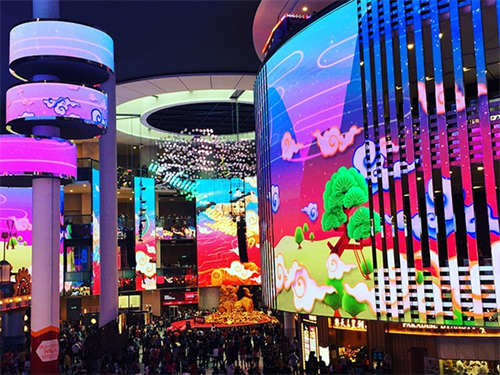
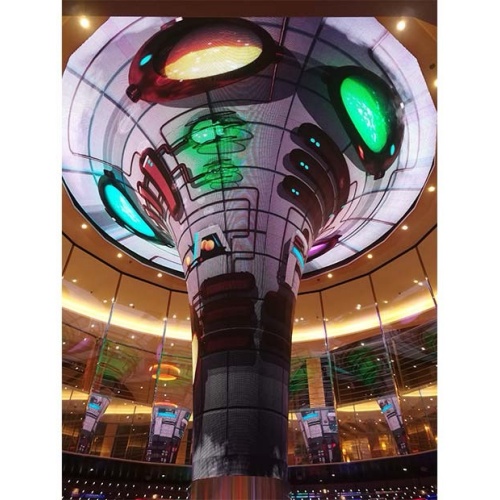
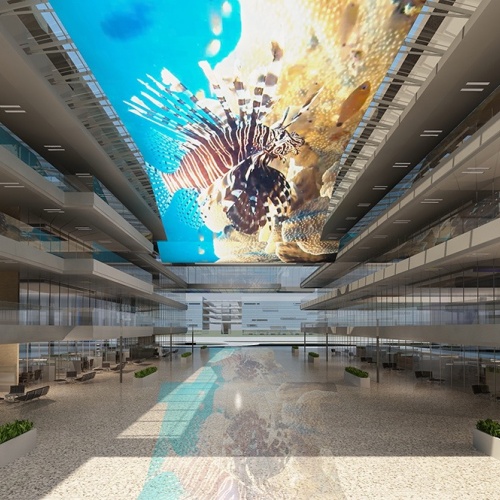
Once upon a time, LED displays were just information carriers for outdoor advertising and large-scale events. Today, it has quietly become a "super interface" connecting the physical world with digital information, permeating every corner of our lives, work, and entertainment. From cinema level home screens, to virtual studios at the entrance of the metaverse, and to the neural tentacles of smart cities, the LED display industry is undergoing a profound transformation driven by technological fission, application integration, and value reshaping.
 |
 |
Engine 1: Technological Advancement - The Display Revolution Led by Mini/Micro LED
The fundamental driving force for industry development always comes from breakthroughs in underlying technologies. Currently, the most eye-catching competition is undoubtedly the "miniaturization" and "integration" competition.
Mini LED backlight (current mainstream breakthrough point)
Current situation: It has been widely used in high-end TV, e-sports displays, laptops and other fields. By using thousands or even tens of thousands of micrometer level LED chips as backlighting, it achieves a million to one ultra-high contrast ratio, ultimate black field, and fine HDR effect comparable to OLED, while avoiding the burn-in problem of OLED.
Impact: It has successfully opened up the high-end consumer display market, allowing LED technology to enter the more profitable civilian "blue ocean" from the commercial display "red ocean", which is a key link in the maturity of the industry chain and market returns.
Micro LED (the Holy Grail of Ultimate Display Technology)
Dawn: The chip size is less than 50 microns, no backlight required, and self luminous. It integrates the high brightness and long lifespan of LCD with the high contrast and wide color gamut of OLED, and is recognized as the ultimate direction of next-generation display technology.
Challenge and Progress: The massive transfer of technology remains the biggest bottleneck in terms of cost and mass production. But currently, consumer grade products such as Samsung's The Wall and domestic manufacturers' Micro LED TVs have begun to debut, marking a crucial step for technology to move from the laboratory to the market. The maturity of COB encapsulation technology is accelerating this process.
The Rise of COB Packaging Technology
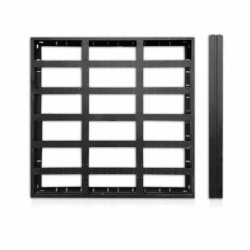
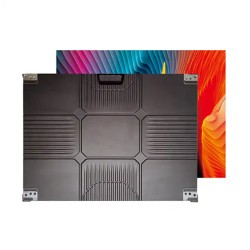
Advantages: Compared to traditional SMD surface mount, COB directly encapsulates chips on PCB boards, which has higher reliability (anti-collision, moisture-proof), better heat dissipation performance, finer appearance (no graininess), and smaller dot pitch potential.
Trend: It is becoming the preferred packaging solution for small pitch LEDs, especially Mini LED direct display products, and is an important force in promoting the popularization of the P1.0 and below pitch market.
 |
 |
Challenges and Prospects
In the face of a bright future, the challenges are equally clear:
Cost pressure: Especially for Micro LEDs, reducing costs is the primary prerequisite for market explosion.
Supply chain security: The autonomy and controllability of core components such as chips are crucial.
Homogenization competition: In traditional segmented markets, price wars remain fierce, and companies must seek differentiation through technological innovation or ecological construction.
Conclusion:
The LED display industry has entered a "deep water zone" driven by technology and scene integration. The future winners will not only be "screen factories" with advanced manufacturing capabilities, but also "scene service providers" who deeply understand the pain points of vertical industries and can provide integrated intelligent solutions of "hardware+software+content+services".
From a simple display panel, to an intelligent interactive node, and then to a virtual world construction base, the boundaries of LED displays are disappearing. Its story is no longer just about 'how to display', but also about 'how to connect' and 'how to create'. This is the best era in the industry.